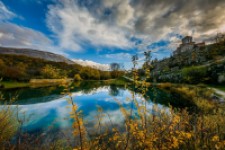
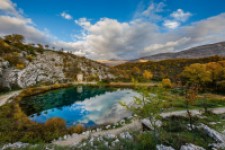
Cetina village and Cetina River


The first written recordings were both river Cetina and the municipalities of Cetina are mentioned date from the year of 1069.  Out of all five municipalities in the region of Dalmatia municipality of Cetina was the biggest at the time. The border of Cetina municipality towards the region of Bosnia was marked by the fortress Glavas situated at the foot of the hill-sides of the Dinara Mountain.

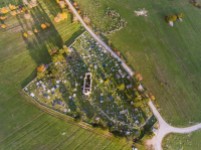
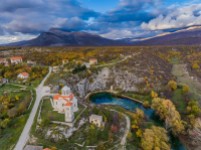
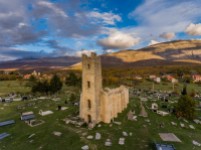
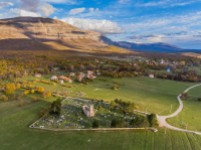
The church of The holly salvation was built in the ninth century at the very heart of the Cetina municipality and is situated between two springs of water. Hence it follows that the church was built two centuries before the Christian world was divided in the year of 1054. The oldest belfry ever built by the Serbs can be found at this very church. The church and the surrounding graveyard make one entity.

During the second half of the fifteenth century due to the frequent attacks of the Turkish army which was advancing through the ravine (gorge) Unista towards the centre of the Cetina municipality, people who inhabited this area were forced to seek shelter at the nearby fortification called Vrlicki grad because they were not able to offer resistance to the enemy advances. In time it happened that the old centre of the municipality got completely evacuated since the people who lived there moved to another location near the Gradina fortification.

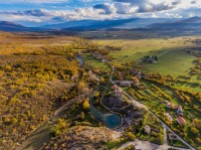
In the year of 1522 the Turks conquered the town of Vrlika and their reign lasted till 1688 when the Mletacka republic overtook the command of the area. Surrounded by the hill-sides of the mountains Dinara and Svilaja is the village Cetina with two main springs of water that later on form the river by the same name.  There are two legends about the origin of the name Cetina. River by the name of Cetynia flows through the southern part of Poland. According to one theory the Serbs have migrated from the area where Poland is today to their new land and they named this new river after the old one they left in Poland. That is one explanation as to how the river got its name. According to a different legend Dalmati people called the river Kertona and the local people accepted the name and adjusted it to their own language by pronouncing it Cetina.

The landscape of the region surrounding the river came to be as the result of the process of furrowing of the Alps during the period of Tertiary. The river-bed of Cetina River is covered with thick layers of the lime-stone and these layers are coated with lake sediments known as marl. The climate is sub Mediterranean with precipitation of 1400mm per one year. On Dinara mountain there is no water on the surface except for the mountain Eye Sator, since the rocky ground has its own set of rules according to which the water always finds its way through the rocks and flows underground. Speaking in terms of hydrography this river is very wide and complex and covers the area of 3700km2.

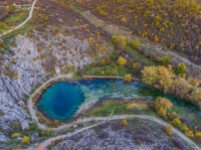
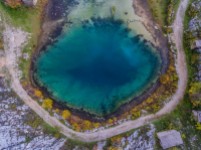
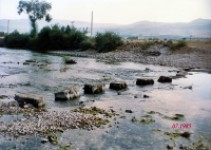
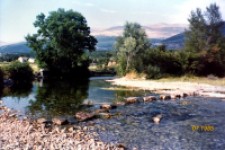
The landscape is very vivid with a spring of water gurgling on one side and the river flowing on the other. There is an abundance of cold, drinking water in Dalmatia that is usually always dry and thirsty. Two main springs of Cetina River are Veliko and Vukovica and in a way they represent two blue eyes of Dinara Mountain. The very river is in a way the miracle of Nature. The water gushes out of the two deep craters thus creating two rivers that become one at the end of the Cetina field. After 105km the river than starts its descend which is 385 meters deep thus becoming one with the Adriatic Sea.  The two river springs are located in the village that bears the same name as the river Cetina and further on as the river flows she leaves behind a range of villages on one side and those are: Djukici, Marijani, Barisici, Medici, Preocani, Vranjesi, Knezevici, Kurobase and Vucici where as on the other side the order in which villages are located is as follows: Cetnici, Milasi, Batice, Vukovici, Skrbici, Baricevici. The big well near by has one beautiful feature which is the Gospodska Cave (the gentleman’s cave). People used it as a shelter and a hiding place in different periods and eras. In war times the local folks as well as the outlaws used the cave as the hiding place.  To this very day it hasn’t been thoroughly explored. The cave has an underground river which reveals itself by the murmur of the water flowing. Some people even claim that this underground river is here divided into two rivers and that one river merges with river Krka and the other with river Cetina. But that too hasn’t been proved. If one goes downstream from the river spring one will come across the two stone bridges that were built in the ancient times. The bridges have served its purpose for centuries and people call them Plocasti and Vukovica bridge. There are more stone bridges in this region similar to these two yet smaller. The building technique was the same everywhere. The material used was the stone that came from the famous quarry that was called Plocista because natural firm stone slabs were the reason the quarry got its name. The quarry is located three kilometers north from the village next to the famous Napoleon’s road the straightest road there is in the region of Cetina. The old bridges were replaced by the new concrete ones that were built thanks to the joint effort of the people of Cetina village in the seventies and the eighties. In the period between the 1920 and 1930. The first two concrete bridges were built and were named Preocki and Skakale. The bridges are surrounded by the meadows that give out the scent of freshness and sweetness of the wildflowers. The river Cetina is free and peaceful when it flows through the fields. This serenity is being disturbed only by the birds singing. At the end of the field the river than keeps on flowing through the narrow passages where it changes its nature roaring, foaming, splashing around cold gushes of water. Both springs of water are partially tamed with three old mills which are Djurutinov, Gargentin and Vukovica.

Both the springs and the river itself abound in the best samples of the fish trout. In the area between the two main springs there are a lot of smaller wells. Some villages have springs with the same name like Preocko, Medica, Barisica, Vrijovac, Milasevo, Baticino, Vukovica and `Begovac` in the field. All these wells become filled with smaller fish, yet still very tasty, during the rainy seasons in spring and in fall. This kind of fish called Pes, that the local folks used to catch with fish-traps is very similar to the saltwater fish called picarel.

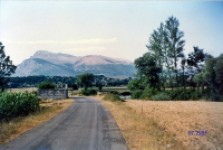
The flat field of Cetina has that special flowery scent in the spring. The field is 8 km long and 3km wide. During the winter the river is so swollen that it floods the field whereas in spring and in early summer the beautifully scented and luxuriant flowers grow in that very same area.  The flowers and the grass are being cut by the folks of Cetina village and left to dry in the sun. The cutting of the grass is done by the 300 haymakers who have strong arms and than the grass is  being gathered by the hard working hands of women who also bring food and water to the men.  The song sung by the boys and girls is heard everywhere while the herds of cows and horses are grazing peacefully along with the numerous herds of sheep and goats.

The upper part of the field beneath the village is adorned by the plough-land, vineyards and gardens where cabbage, potato, tomato, carrots and beans are planted and already growing. In the early spring the beautifully scented flowers from the numerous cherry trees can be seen everywhere and those flowers will soon turn into delicious and big red and yellow cherries. The fresh and sweat air is filled with the buzzing of the bees collecting honey. The season of gathering grapes, figs, nuts, cornels and quince presents the time of great joy for children. 

During the long autumn nights the folk songs about heroes are read and said and toasts are made with wine poured from the barrels made out of spruce.

The Cetina field which once represented the natural oasis of beauty is today unfortunately almost completely deserted and empty.


*Vuk*


Copyright @CETINA.NET all rights reserved
-------------------------------------------------------------------------------